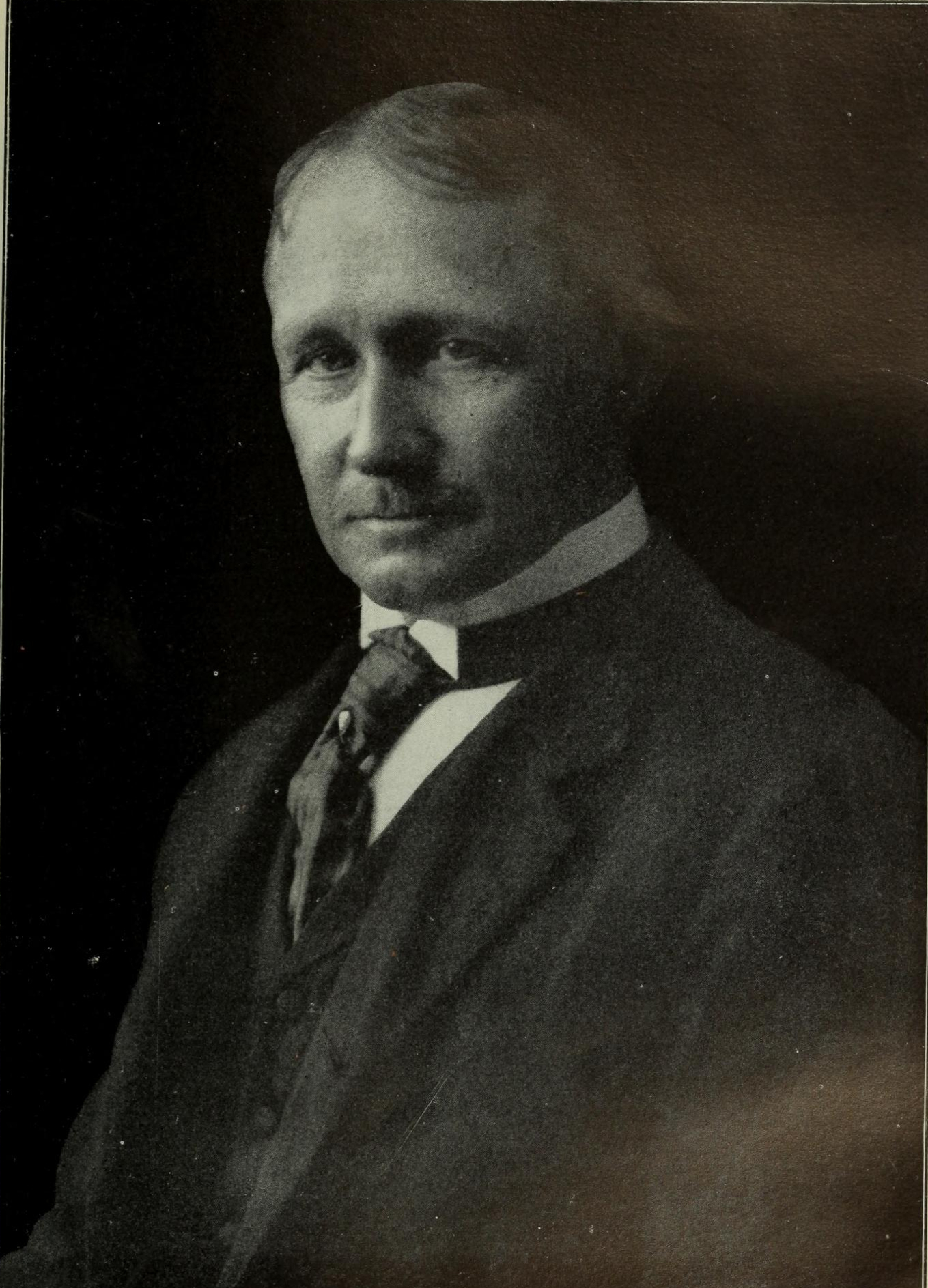
From Habitual Methods to Studying Work
In his 1911 book The Principles of Scientific Management, Taylor contrasted the systematic study of operations with relying solely on habit and individual experience. He was interested in ways of working, selecting and training employees, cooperation, and the distribution of responsibilities between management and workers.
The historical context was industrial production in the early twentieth century. Today, these ideas should be applied with consideration for the nature of the work, safety, competencies, and employee autonomy. The method does not justify mechanically transferring factory standardization to research, creative work, or complex negotiations.
Four Foundations of Scientific Management
- Study the work. Develop well-founded methods instead of relying exclusively on empirical techniques.
- Select and train. Help the employee master the work rather than leaving training to chance.
- Cooperate. Ensure that the developed approach is applied through joint work between management and employees.
- Divide responsibility. Management assumes responsibility for preparation and planning, for which it has the appropriate capabilities.
Illustrative example: an operation map before and after improvement
A modern educational example of picking one hypothetical order. The time figures are invented to explain the calculation; they are not data from Taylor’s experiments or a warehouse standard.
| Stage | Before, min | After, min | What was changed |
|---|---|---|---|
| Locating the bin | 4 | 2 | Addresses and labeling were clarified |
| Movement | 6 | 4 | An unnecessary detour in the route was eliminated |
| Picking the item | 5 | 5 | Conditions remained unchanged |
| Completeness check | 3 | 3 | The check was retained |
| Packing | 4 | 3 | Materials were prepared at the workstation |
| Total | 22 | 17 | 5 minutes less |
The time was reduced through work organization, not by removing the check. To confirm the effect in practice, observations of comparable orders, error data, and a safety assessment are needed. One successful run does not prove a sustained improvement.
What should be recorded during an actual observation?
The order composition, working conditions, the employee’s experience, the duration of each stage, exceptions, and the quality of the result. Do not mix waiting for an unavailable item with the time required for ordinary picking.
Educational example: picking an order in a warehouse
Suppose that orders with the same composition are assembled in different amounts of time. At first, the manager attributes this to differences in diligence. Joint observation reveals a different picture: some of the time is spent locating the bin, clarifying labels, and waiting for packing materials.
For the pilot, one recurring group of orders is selected. The sequence of actions, the location of goods, the number of movements, errors, and working conditions are recorded. The observation is coordinated with the employees: the task is to improve the way of working, not to find the person with the shortest single result.
| Observation | Change to be tested | Result criterion |
|---|---|---|
| The order picker searches for similar labels. | Clarify labeling and the storage sequence. | Fewer picking errors and requests for clarification. |
| Packing is located far from the workstation. | Ensure that the necessary materials are accessible. | Fewer unnecessary movements without compromising safety. |
| A novice learns from different pieces of advice. | Prepare an agreed sequence and training. | Consistent performance and a clear analysis of difficulties. |
How to verify a new way of working
Conduct several observations on comparable orders, with different employees and under normal conditions. Record exceptions separately: an item being unavailable, damaged packaging, or a change in the order composition. If these are mixed with normal processing, it will be difficult to understand what exactly has changed.
Compare not only duration, but also errors, rework, workload, and ease of performance. A reduction in time achieved by skipping a check cannot be considered an improvement. If necessary, change the layout, instructions, or order preparation and check the changed section again.
Can a standard be set based on the fastest employee’s result?
A single result does not show the process’s sustainable potential. It may depend on the order composition, experience, or the accidental absence of obstacles. Actual standard-setting requires a well-founded method, sufficient observations, consideration of conditions, and applicable requirements. The educational example does not establish a time standard.
What should be included in a work standard
- The boundaries of the operation and the expected result.
- The required materials, tools, and initial data.
- The sequence of actions and quality checks.
- The procedure for dealing with an exception or discrepancy.
- The method of training and checking understanding.
- The person responsible for revision when the process changes.
A standard is useful as an agreed starting point. If an employee finds a better way, the proposal should be submitted for review. Otherwise, the document becomes a ban on learning, while the actual work gradually diverges from the description.
Limitations and common mistakes
A rigid separation between planning and execution can weaken the use of employees’ experience. Reducing complex work to easily measurable actions may leave the quality of decisions and cooperation outside the framework. These are reasons to adapt the approach critically, not to transfer the historical system unchanged.
How does Taylor differ from Fayol?
Taylor primarily studied the organization of work performance and improving production efficiency. Fayol examined the manager’s administrative functions and the coordination of the enterprise as a whole. This is a difference in emphasis, not a claim that one author dealt only with workers and the other only with directors.