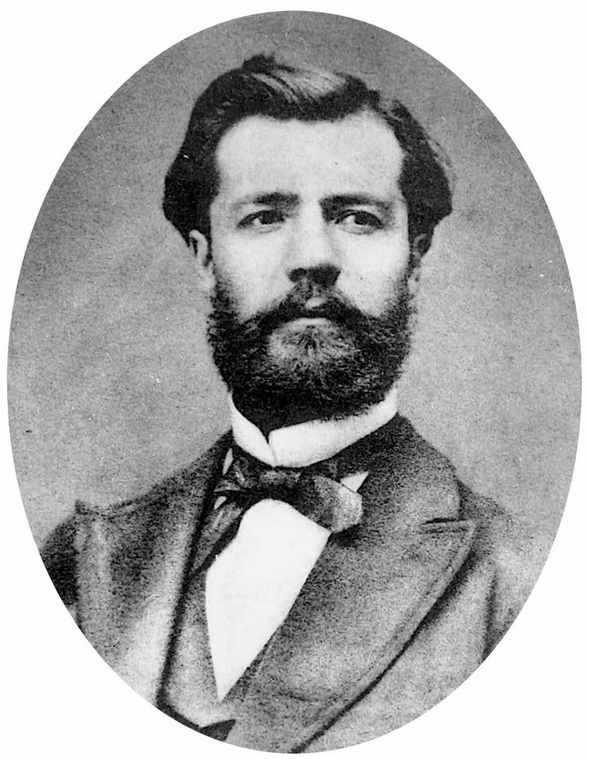
Fayol’s central question
Technical competence alone does not ensure that an organization is managed effectively. Goals must be aligned, resources secured, authority allocated and the execution of decisions checked. In his work General and Industrial Management, first published in 1916, Fayol distinguished administrative activity alongside the technical, commercial, financial and other functions of an enterprise.
The five functions of management
| Function | Content |
|---|---|
| Forecasting and planning | Determine the course of action and prepare for the future. |
| Organization | Ensure the work is carried out with people and material resources. |
| Command | Direct the activities of personnel. |
| Coordination | Align the efforts and actions of the organization’s parts. |
| Control | Check that work complies with established decisions and rules. |
This is the historical formulation. In modern textbooks, the functions may be combined or called something else. It is important to see the different tasks behind the names: having a plan does not yet mean that resources have been allocated, and regular reporting does not mean that departments have actually coordinated their work.
What 14 principles did Fayol formulate?
- Division of work.
- Authority and responsibility.
- Discipline.
- Unity of command.
- Unity of direction.
- Subordination of individual interests to the common interest.
- Remuneration.
- Centralization.
- Scalar chain.
- Order.
- Equity.
- Stability of tenure of personnel.
- Initiative.
- Esprit de corps.
These principles should be considered in light of working conditions, rather than as a one-size-fits-all framework for every enterprise. For example, the degree of centralization requires a choice, while initiative presupposes room for independent action.
Illustrative example: the five functions in a single project
A modern educational model for launching a product. It illustrates Fayol’s functions rather than reproducing a historical drawing from his book.
| Function | Action in the project | Verifiable result |
|---|---|---|
| 1. Planning | Define the product, deadline and conditions for completion | An agreed launch plan |
| 2. Organization | Allocate specialists, equipment and budget | Confirmed resources |
| 3. Command | Assign tasks and clarify authority | Those carrying out the work understand their decision-making authority and responsibilities |
| 4. Coordination | Link technology preparation, procurement and acceptance | Departments work from a single version of the requirements |
| 5. Control | Compare actual readiness with the plan | Deviations and actions are recorded |
The functions do not necessarily take place strictly in sequence, nor are they assigned to five different people. They coexist in the manager’s work. The model helps identify an omission: for example, tasks have been assigned, but resources have not yet been secured.
Educational example: launching a new type of product
Suppose the commercial department promises customers delivery within a month. Production has not yet agreed on the technology, procurement has not received the final specification, and the quality department is preparing acceptance criteria. Each manager is occupied with their own task, but there is no common, confirmed plan.
A modern application of Fayol’s ideas can begin with one meeting of the people responsible for the outcome. The team defines exactly what counts as launch readiness: approved documentation, available materials, trained personnel and an accepted pilot batch. It then allocates decisions, not just assignments.
| Manager’s action | Result in the example |
|---|---|
| Agree on the plan | The launch date is based on verified assumptions. |
| Allocate resources | Specialists, equipment and budget are assigned. |
| Define authority | It is clear who approves changes to the specification. |
| Organize coordination | Procurement learns about a change before the order is placed. |
| Check readiness | Deviations are discussed before the promised delivery date. |
How to implement this without unnecessary bureaucracy
For a pilot, it is enough to choose one shared process and describe its purpose, responsible parties, decision boundaries and procedure for reviewing deviations. There is no need to start with extensive regulations covering every situation. If a decision is reconsidered at every meeting, determine what is missing: authority, initial data or an agreed criterion.
It is useful to check separately whether responsibility matches capability. A manager cannot be required to launch on time if they cannot obtain the necessary specialists or initiate a date revision. In that case, the problem is organizational, not merely disciplinary.
Does unity of command apply in a project or matrix structure?
A literal copy of the historical model may not be suitable. In a modern project, the functional manager and project manager are responsible for different decisions. The practical task is to define priorities and a way to resolve conflicts in advance, so that an employee is not left caught between incompatible instructions.
What to check after the change
- Whether the number of conflicting instructions has decreased.
- Whether it has become clear who makes a disputed decision.
- Whether repeated approvals caused by incomplete data have decreased.
- Whether constraints are identified before a deadline is missed.
- Whether employees still have the opportunity to suggest improvements.
For an educational launch, several checkpoints can be compared before and after introducing a common procedure. The mere appearance of a new report does not prove improvement. What matters more is whether control led to a timely decision and coordination led to less rework.
Common misreadings of Fayol
Reducing his ideas to a rigid hierarchy alone means overlooking equity, initiative and interaction. The opposite extreme is to call any list of tasks a management plan. A list is useful when it is linked to resources, authority and a verifiable result. The example provided is a modern interpretation, not an instruction from Fayol’s book.